
Hybrid vs. Native Mobile App Development: Choosing the Right Path
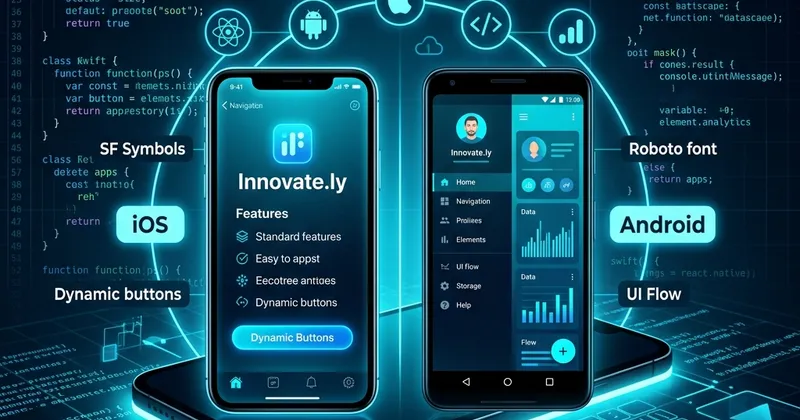
When building a mobile application, one of the most critical early decisions is choosing between Native and Hybrid (cross-platform) development. Both approaches have their strengths and weaknesses, and the right choice depends heavily on your budget, timeline, and product complexity.
Here is a breakdown of both paths to help you make an informed decision:
Native Mobile App Development
Native development involves writing separate codebases for iOS (using Swift/Objective-C) and Android (using Kotlin/Java).
- Pros:
- Peak Performance: Native apps run directly on the operating system, making them incredibly fast and fluid.
- Full Platform Access: Instantly access new hardware APIs, sensors, ARKit, or native OS features as soon as Apple or Google releases them.
- Premium UI/UX: Adheres perfectly to the design guidelines of each operating system.
- Cons:
- Higher Costs: You need to hire separate teams for iOS and Android.
- Longer Development Cycles: Building and maintaining two separate codebases doubles the design and engineering efforts.
Hybrid (Cross-Platform) Mobile App Development
Hybrid development involves writing a single codebase (usually in JavaScript, TypeScript, or Dart) that runs on both platforms using frameworks like React Native or Flutter.
- Pros:
- Single Codebase: Write once, run on both iOS and Android, which slashes development time.
- Lower Costs: Requires fewer developers and resources to launch the initial product.
- Faster Time-to-Market: Deploy updates and features to both app stores simultaneously.
- Cons:
- Slight Performance Overhead: Hybrid frameworks require a bridge to communicate with native APIs, which can cause micro-stutters in highly intensive apps.
- Lag in New Feature Support: If Apple or Google releases a brand new hardware feature, you often have to wait for the community or framework team to write wrapper plugins.
Which One Should You Choose?
- Choose Native if: You are building a graphic-heavy game, an app requiring extensive offline data processing, or a product that relies heavily on advanced system integration (like Bluetooth, custom cameras, or sensors).
- Choose Hybrid if: You are building a content-driven app, an e-commerce storefront, an MVP to test the market quickly, or have budget constraints.
By understanding the technical trade-offs, you can pick the platform strategy that aligns with your business goals.